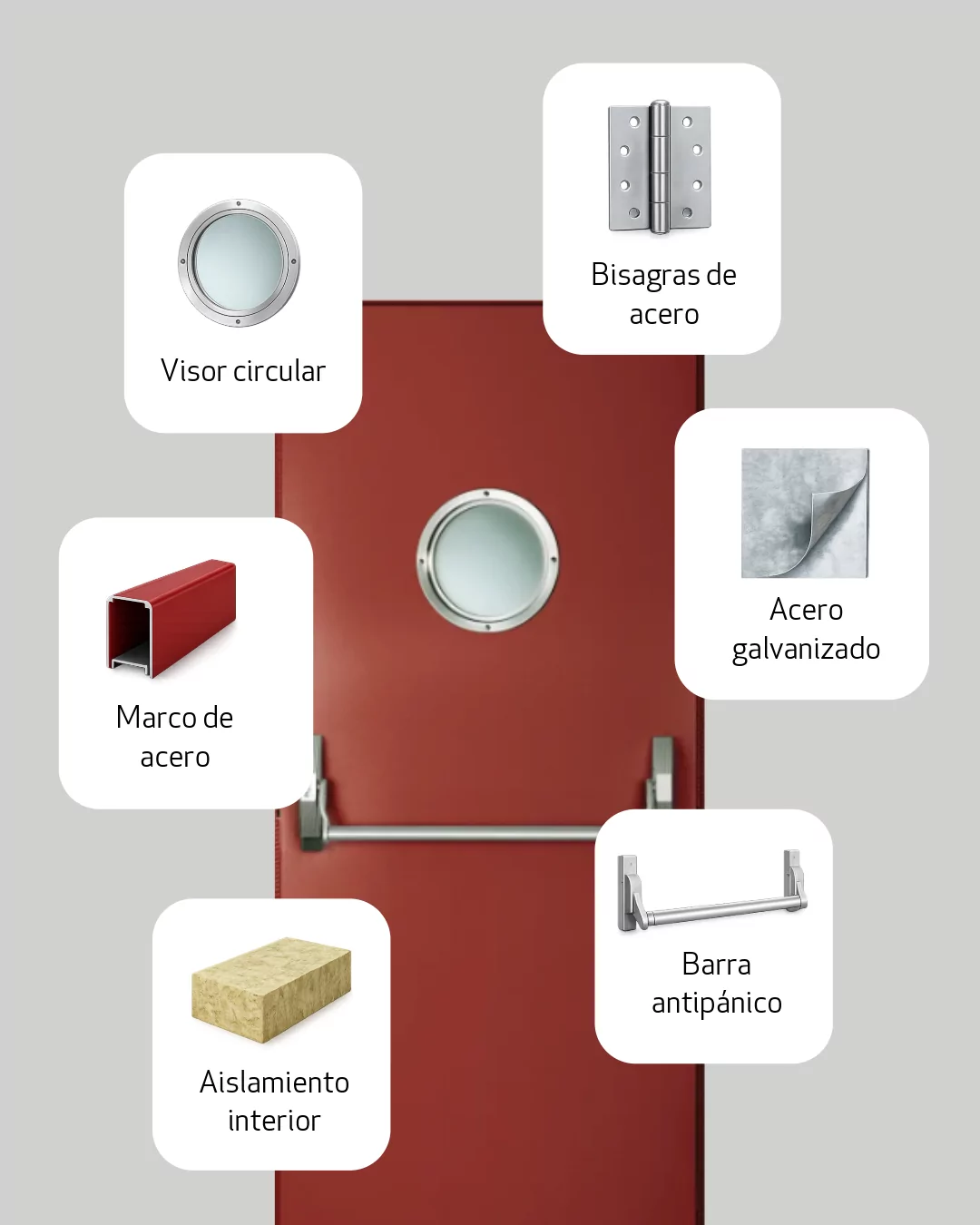
The manufacture of fire doors is a key process in ensuring fire safety. These doors, designed with precision and made from specialized materials, comply with strict regulations to protect lives and property.
Materials Used in the Manufacture of Fire Doors
Fire-resistant materials
The most common materials include steel, treated wood, and special heat-resistant glass. Each is selected based on the specific needs of the project.
Types of Finishes and Special Treatments
Doors can be treated with additional fire-retardant measures, such as intumescent paint coatings, to improve their fire resistance.
Design and Technical Specifications
Classification Based on Fire Resistance
Ratings such as EI30, EI60, or EI120 indicate how long a door can withstand fire, protecting lives and property.
Thermal and Acoustic Insulation Standards
In addition to being fire-resistant, many fire doors provide thermal and acoustic insulation, improving the building’s functionality.
Stages of the Fire Door Manufacturing Process
- Selection of Certified Materials
The first step is to choose materials that comply with international and local standards to ensure quality.
- Cutting and assembling the parts
The door components are cut using precision tools and carefully assembled to ensure a perfect fit.
- Application of Fire Retardant Treatments
The components undergo treatments that increase their fire resistance, such as the application of layers of intumescent paint.
- Quality Testing and Certification
The doors undergo exhaustive testing in accredited laboratories to verify their durability and functionality.
Applicable international and national regulations
International Standards
Standards such as EN 1634-1 and NFPA 80 establish the technical requirements for the manufacture of fire doors.
Local Regulations
In Spain, the Technical Building Code (CTE) regulates the installation and use of these doors in buildings.
Common Errors in the Manufacturing Process
Lack of quality control
Failure to conduct thorough testing may compromise safety and lead to the denial of certification.
Use of Non-Certified Materials
Non-approved materials may compromise the effectiveness of fire doors.
Maintenance and Recertification of Fire Doors
Recommended Frequency of Inspections
Annual inspections must be conducted to verify that fire doors are functioning properly.
Replacement of Worn Parts
Intumescent seals and other components must be replaced regularly to maintain their effectiveness.
Conclusion
The manufacturing process for fire doors is essential to ensuring safety in buildings. From the selection of materials to final certification, each step is crucial to meeting quality and safety standards.
Frequently Asked Questions
- What materials are commonly used in the manufacture of fire doors?
Steel, treated wood, and heat-resistant glass are the most commonly used materials. - What does EI60 mean for fire doors?
It indicates that the door can withstand fire for 60 minutes. - Is it mandatory to certify fire doors?
Yes, certification is required under local and international regulations. - How often should fire doors be inspected?
An annual inspection is recommended to ensure proper operation. - What happens if a fire door isn’t certified?
It may result in legal penalties and an increased risk of fire.