Fire safety is a priority in any type of building, and fire doors play a crucial role in disaster prevention. In this article, you’ll learn everything about the process of certifying these doors, from applicable regulations to the steps required to meet the most stringent standards.
International and National Regulations
Applicable International Standards
Standards such as EN 1634-1 in Europe and NFPA 80 in the United States establish the basic requirements for fire resistance and proper installation.
Legal Requirements in Spain
In Spain, the Technical Building Code (CTE) sets forth the specifications that fire doors must meet, including their classification based on minutes of resistance (EI30, EI60, etc.).
The Importance of Certification for Fire Doors
Benefits for Businesses
The certification ensures that the doors comply with safety regulations, which protects companies from legal penalties and enhances their reputation.
Impact on Building Safety
Buildings with certified fire-rated doors are better able to contain fires, reducing the risk of serious damage.
Requirements for Obtaining Certification
Materials and Design
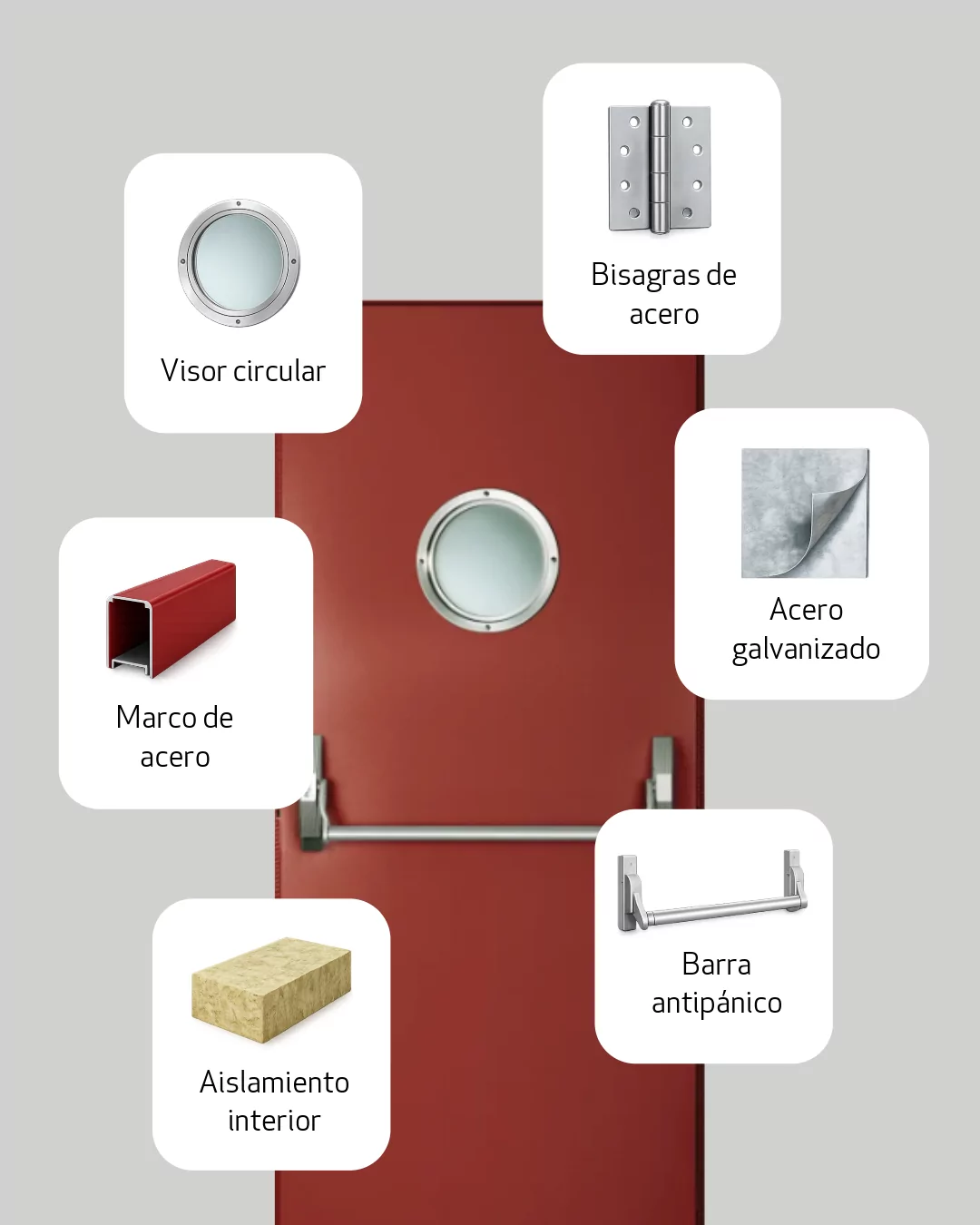
Doors must be made of high-quality fire-resistant materials, such as steel, heat-resistant glass, or treated wood.
Stress and Functionality Testing
Testing must be conducted at accredited laboratories to evaluate the fire resistance and functionality of doors.
Required Documentation
Technical drawings, material specifications, and previous test results are required to begin the certification process.
Steps in the Certification Process
- Selecting a certification body: Choose a recognized body, such as AENOR in Spain or UL internationally, to conduct the tests and issue the certificate.
- Technical testing: The tests evaluate fire resistance and compliance with international standards.
- Certification Issuance: Once the tests have been passed, the agency issues a certificate confirming the product’s compliance.
Common Mistakes During the Process
Lack of technical preparation: Failure to meet the initial requirements—such as having the appropriate materials or complete documentation—can delay certification.
Lack of knowledge of local regulations: Failure to be familiar with national regulations can lead to the denial of certification.
Costs Associated with Certification
Cost Estimates by Certification Type: The average cost of certification ranges from 500 to 3,000 euros, depending on the type of door and the required tests.
Long-term financial impact: Initial certification may seem costly, but it ensures savings on fines and greater protection in the event of a fire.
Conclusion
Obtaining certification for fire doors is essential to ensuring safety in any building. This process not only protects lives but also complies with legal regulations and reduces financial risks.
Frequently Asked Questions
- How long is a fire door’s certification valid?
Generally, 3 to 5 years, depending on the certifying body. - Is it mandatory to certify all fire doors?
Yes, to comply with safety regulations. - What tests are required to certify a fire door?
Fire resistance, functionality, and technical design testing. - What happens if a fire door isn’t certified?
There may be legal penalties and an increased risk of fire. - How much does it cost to certify a fire door?
The cost ranges from 500 to 3,000 euros, depending on the tests required.